Pharmaceutical Gas Chromatography vs. Wet Chemistry Methods
In pharmaceutical manufacturing, nitrogen is everywhere. It inerts vessels, blankets sensitive products, transfers materials through lines, and controls headspace in packaging. It is so routine that its analytical requirements are easy to overlook.
That oversight carries real risk. Nitrogen introduced into a sterile or critical process can carry oxygen, moisture, or hydrocarbon contamination acquired in distribution, none of which would appear on a supplier’s Certificate of Analysis. Both the United States Pharmacopeia (USP) and the European Pharmacopoeia (EP) are explicit on this point: gas quality must be verified at the point of use, not assumed from documentation.
This article examines the two main analytical approaches to nitrogen gas testing, pharmaceutical gas chromatography and wet chemistry, explains where each applies, and outlines what a strong, audit-ready program looks like.
What Nitrogen Gas Analysis Actually Tests
Nitrogen gas analysis is not a single test. It is a combination of techniques selected based on process risk and pharmacopeial requirements. A typical program evaluates:
- Identity – confirming the gas is nitrogen, not a substituted or mislabeled supply
- Purity (assay) – the percentage of nitrogen, typically ≥99.0% for pharmaceutical grade
- Oxygen content – critical in oxidation-sensitive processes
- Moisture – measured as dew point; relevant to lyophilization and sterile operations
- Hydrocarbons – sourced from compressor oils or distribution system contamination
- Bioburden – enumeration or detection of microbiological contamination, such as bacteria, yeast or mold.
A transfer line used for non-critical product movement may require only basic purity verification. A sterile fill line demands a much broader evaluation. Testing scope should reflect process risk, not a blanket standard applied uniformly across the facility.
Pharmaceutical Gas Chromatography: The Primary Assay Method
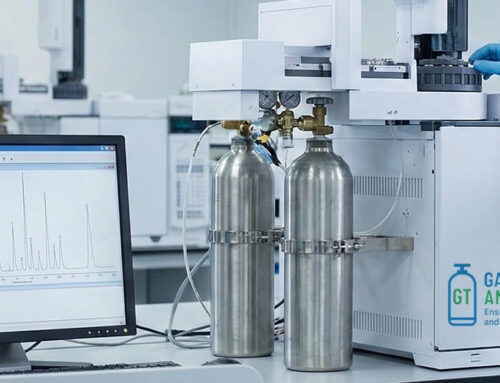
Gas chromatography (GC) works by separating the components of a gas mixture as they travel through a column, then detecting and quantifying each one. For nitrogen analysis, this typically means:
- A thermal conductivity detector (TCD), which responds to any gas component, no combustion required
- A molecular sieve column for separating permanent gases such as nitrogen, oxygen, and argon
- Helium or argon as the carrier gas (carrier must differ from the analyte)
This setup delivers high specificity and reproducible, quantitative results. It can detect oxygen at trace concentrations and is directly aligned with USP and EP compendial methods, making results defensible during regulatory inspections and audits.
For these reasons, pharmaceutical gas chromatography is the gold standard for nitrogen purity testing and oxygen quantification. When regulators review a nitrogen testing program, they expect to see GC as the backbone of the analytical approach.
Wet Chemistry: Where It Fits—and Where It Doesn’t
What Wet Chemistry Is
Wet chemistry refers to analytical techniques that use liquid-phase chemical reactions to detect or quantify a substance. Classical examples include titrations, colorimetric assays, and chemical absorption followed by volumetric analysis. These methods have a long history in pharmaceutical quality control and remain valid for a range of applications.
Wet Chemistry in Gas Testing
For gas analysis, wet chemistry is not the primary tool—but it does appear in specific contexts:
- CO₂ absorption titration. Carbon dioxide assay
CO₂ can be absorbed into an alkaline solution such as sodium hydroxide and quantified via back-titration. This is a legitimate wet chemistry method and remains pharmacopeially referenced.
- Detector tubes. Hydrocarbon screening
Hydrocarbon detector tubes pass gas through a sorbent material, triggering a colorimetric reaction proportional to concentration. The result is semi-quantitative, but useful for screening and field verification.
- Hygroscopic absorption. Moisture (historical)
Legacy moisture methods used phosphorus pentoxide or similar reagents in gravimetric or absorption setups. These have largely been replaced by electronic dew point analyzers.
Why Wet Chemistry Doesn’t Work Well for Nitrogen
Nitrogen is chemically inert under most laboratory conditions. It does not readily participate in liquid-phase reactions in a way that allows reliable quantification. There is no equivalent to the CO₂ absorption titration for nitrogen—the gas simply does not react in a useful way.
This means wet chemistry cannot reliably determine:
- Nitrogen identity
- Nitrogen purity (assay)
- Trace oxygen content in a nitrogen stream
For these applications, separation-based or physical detection methods are required—and gas chromatography is the most established and regulatory-accepted option.
Method Comparison at a Glance
| Attribute | Wet Chemistry | Pharmaceutical GC |
|---|---|---|
| Analysis medium | Liquid-phase reactions | Gas-phase separation |
| Precision | Moderate | High |
| Specificity | Limited | High |
| Regulatory defensibility | Lower | Strong |
| Primary use for N₂ | Limited / supporting role | Gold standard |
Common Weaknesses in Nitrogen Testing Programs
Even well-resourced facilities run into gaps when nitrogen testing is treated as a low-priority compliance check rather than an active control. The most frequent issues:
Over-Reliance on Supplier Documentation
Certificates of Analysis reflect gas quality at the point of manufacture, not at the point of use. Contamination acquired during storage, cylinder handling, and distribution is invisible to supplier data. Point-of-use testing is not optional; it is the only way to know what is actually entering the process from the gas stream and all of the components between the source and the POU.
Incomplete Testing Scope
Purity alone is not sufficient. A nitrogen stream can pass a purity specification while carrying elevated oxygen or moisture—both of which can compromise product quality or sterility assurance. Testing programs should address the full impurity profile relevant to the process, not just the easiest parameter to measure.
Poor Sampling Practices
Even technically excellent chromatography is only as good as the sample it receives. Improper sampling—drawing from the wrong location, purging inadequately, or using contaminated collection vessels—produces results that misrepresent actual conditions. Sampling procedures need the same rigor as the analytical method.
Static Programs That Don’t Evolve
Testing frequency and scope should respond to system changes, new process risks, and trending data. A program set up five years ago for a simpler operation may no longer be appropriate as processes expand or distribution systems change.
Regulatory Expectations
FDA, EMA, and pharmacopeial bodies expect nitrogen gas analysis programs to function as genuine control strategies, not paperwork exercises. In practice, this means:
- Methods are scientifically justified and appropriate for the application
- Pharmaceutical gas chromatography (or an equivalent technique) is used for purity and impurity testing
- Sampling locations and frequency reflect a documented risk assessment
- Data is trended over time and used to drive program decisions
An auditor reviewing a nitrogen testing program will look for evidence that the facility understands its own risk, and has designed testing accordingly. A generic, one-size-fits-all approach is unlikely to satisfy that expectation.
Building a Defensible Nitrogen Gas Analysis Program
The strongest programs integrate four elements:
Core Analytical Testing
Identity and purity via pharmaceutical gas chromatography form the foundation. These tests should be performed at representative points of use, not just at the cylinder or central supply point.
Supporting Impurity Testing
Depending on process risk, this includes oxygen content, dew point (moisture), and hydrocarbons. Not every application requires all three, but the decision not to test for a particular impurity should be documented and justified.
Risk-Based Sampling
Sample from locations that represent worst-case conditions, e.g. the most distant points from supply or the highest-risk process connections. Include sampling after any maintenance or system interruption that could introduce contamination.
Ongoing Monitoring and Trend Analysis
Trending results over time is useful to detect drift before it becomes a problem. Frequency should increase when trends suggest system degradation or when significant changes occur. This can decrease when long-term data demonstrates consistent performance.
The Bottom Line
Nitrogen may be an inert gas, but the consequences of inadequate nitrogen gas analysis are not. Contaminated nitrogen reaching a sterile process, an oxidation-sensitive product, or a packaging line is a real quality risk that supplier certificates will not catch.
Wet chemistry methods have a place in pharmaceutical gas testing, but that place is not nitrogen purity or identity. For those applications, pharmaceutical gas chromatography remains the method of choice: precise, specific, pharmacopeially aligned, and audit-ready.
The goal of nitrogen gas analysis is not to generate data. It is to maintain confidence that the gas entering your process meets specification, every time, at every point of use.
Need Support with Nitrogen Gas Analysis?
If your team is evaluating testing methods, implementing pharmaceutical gas chromatography, or reassessing an existing program against current regulatory expectations, we can help you build a risk-based, audit-ready approach that fits your operation.